Waite-Smith tarot (1909)
Six of Swords
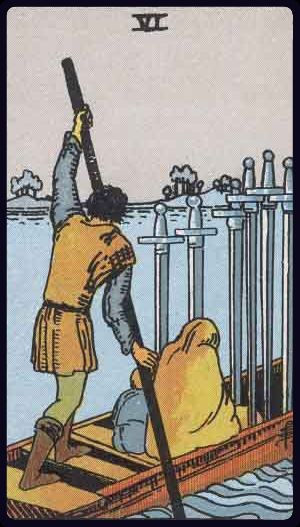
The Six of Swords shows a figure ferried across water, a few swords laid in the boat. It is the card of the necessary passage — leaving difficulty for calmer shore.
Historical meanings below are quoted from A. E. Waite’s The Pictorial Key to the Tarot (1911). The language reflects that period; the following sections offer contemporary reflection.
Upright meaning
Journey by water, route, way, envoy, commissionary, expedient.
Reversed meaning
Declaration, confession, publicity; one account says that it is a proposal of love.
Psychological themes
It represents the transition out of trouble: a move made for relief. It appears when you carry your burdens but change the water. The far shore is quieter; the ride is the work.
Traditional and cultural meanings
In the traditional reading the Six is a journey by water, route and commission. It has long been read as envoy and expedient, and by reversal as confession, publicity or a proposal of love. The boat crosses; the swords ride low.
Ways to reflect on this card
- If you move: the passage to calmer water.
- If you flee: a change that actually helps.
- If you carry: the swords come with you, lighter.
Questions for reflection
- What difficulty am I crossing away from?
- Am I moving toward peace or just away?
- What must I bring, and what can I leave?
Common questions
What does the Six of Swords mean?
A transition to safer ground — leaving trouble behind, a journey made for relief. Movement toward calm.
Six vs Eight of Cups?
The Six crosses water outward; the Eight walks away from empty cups. Both leave; the Six travels, the Eight departs.
Related cards
Explore the imagery in your own dream
Tarot offers one way to think about symbols. A dream interpretation also considers the events, feelings, and personal details you describe.
Interpret my dream Keep a dream journal Draw a three-card spread
Card readings here are a psychological and cultural lens, not a prediction and not medical or financial advice.