Waite-Smith tarot (1909)
Five of Swords
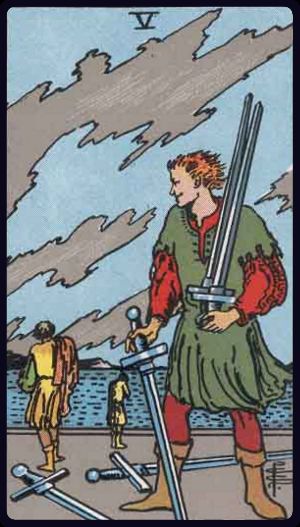
The Five of Swords shows a figure with two swords, two more dropped, one walking away. It is the card of the pyrrhic win — victory that costs more than it gains.
Historical meanings below are quoted from A. E. Waite’s The Pictorial Key to the Tarot (1911). The language reflects that period; the following sections offer contemporary reflection.
Upright meaning
Degradation, destruction, revocation, infamy, dishonour, loss, with the variants and analogues of these.
Reversed meaning
The same; burial and obsequies.
Psychological themes
It represents the hollow of a fight won badly: domination at the price of trust. It appears when you could win and should not. The walking-away figure keeps his dignity.
Traditional and cultural meanings
In the traditional reading the Five is degradation, destruction and infamy. It has long been read as loss and its variants, and by reversal as burial and obsequies. The swords are taken; the relationship is left.
Ways to reflect on this card
- If you won: at what cost?
- If you lose: keep your dignity, walk.
- If you fight: is this worth the stain?
Questions for reflection
- What victory would shame me?
- Am I winning the argument and losing the person?
- When is not fighting the stronger move?
Common questions
What does the Five of Swords mean?
A win that costs too much — degradation, conflict where the gain is hollow. The card questions the price of victory.
Five vs Seven of Swords?
The Five wins openly and badly; the Seven wins by sneaking away. One dominates, the other slips out.
Related cards
Explore the imagery in your own dream
Tarot offers one way to think about symbols. A dream interpretation also considers the events, feelings, and personal details you describe.
Interpret my dream Keep a dream journal Draw a three-card spread
Card readings here are a psychological and cultural lens, not a prediction and not medical or financial advice.