Waite-Smith tarot (1909)
Four of Swords
The Four of Swords shows a figure lying in repose, three swords above, one beneath. It is the card of necessary rest — withdrawal to recover before the fight resumes.
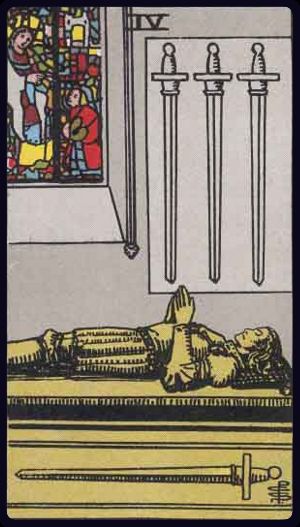
Historical meanings below are quoted from A. E. Waite’s The Pictorial Key to the Tarot (1911). The language reflects that period; the following sections offer contemporary reflection.
Upright meaning
Vigilance, retreat, solitude, hermit's repose, exile, tomb and coffin. It is these last that have suggested the design.
Reversed meaning
Wise administration, circumspection, economy, avarice, precaution, testament.
Psychological themes
It represents the truce with exertion: the need to be still to mend. It appears when you must stop, not push. The sword under the stone is readiness kept, not aggression.
Traditional and cultural meanings
In the traditional reading the Four is vigilance, retreat and the hermit's repose. It has long been read as solitude and exile, and by reversal as wise administration and economy. The figure rests; the swords wait above.
Ways to reflect on this card
- If you are spent: the rest you owe yourself.
- If you hide: recovery, not retreat in shame.
- If you push: the body will decide for you.
Questions for reflection
- Where am I refusing to rest?
- Is this withdrawal healing or hiding?
- What would true recovery look like?
Common questions
What does the Four of Swords mean?
Rest and recovery — a necessary stillness to mend before acting again. Convalescence, not defeat.
Four vs Eight of Swords?
The Four rests by choice; the Eight is trapped and cannot. One recovers, the other is bound.
Related cards
Explore the imagery in your own dream
Tarot offers one way to think about symbols. A dream interpretation also considers the events, feelings, and personal details you describe.
Interpret my dream Keep a dream journal Draw a three-card spread
Card readings here are a psychological and cultural lens, not a prediction and not medical or financial advice.