Waite-Smith tarot (1909)
Four of Cups
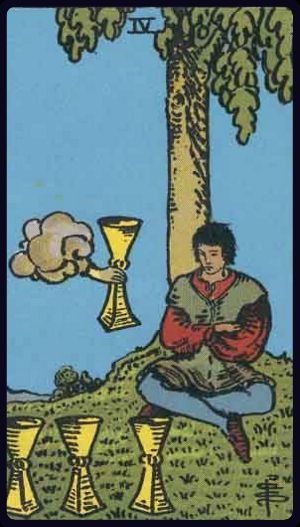
The Four of Cups shows a seated figure turning from three cups, a fourth offered by a hand. It is the card of boredom and the offered chance not yet seen.
Historical meanings below are quoted from A. E. Waite’s The Pictorial Key to the Tarot (1911). The language reflects that period; the following sections offer contemporary reflection.
Upright meaning
Weariness, disgust, aversion, imaginary vexations, as if the wine of this world had caused satiety only; another wine, as if a fairy gift, is now offered the wastrel, but he sees no consolation therein. This is also a card of blended pleasure.
Reversed meaning
Novelty, presage, new instruction, new relations.
Psychological themes
It represents the fatigue of satiety: the closed heart that has had enough. It appears when you are offered something new and do not yet want it. The fourth cup is the opening you are refusing to notice.
Traditional and cultural meanings
In the traditional reading the Four is weariness, disgust and imaginary vexations. It has long been read as satiety with the wine of the world, and by reversal as novelty and new instruction. The hand offers; the figure broods.
Ways to reflect on this card
- If you are bored: the gift you keep refusing.
- If you are offered: look up from the three.
- If you withdraw: is it rest or resignation?
Questions for reflection
- What am I turning away from that might help?
- Is my discontent real or habitual?
- What new thing have I refused to see?
Common questions
What does the Four of Cups mean?
Discontent and the overlooked chance — boredom with what you have, and a new offer not yet noticed.
Four vs Three of Cups?
The Three is joy shared; the Four is joy refused. One raises the cup, the other turns from it.
Related cards
Explore the imagery in your own dream
Tarot offers one way to think about symbols. A dream interpretation also considers the events, feelings, and personal details you describe.
Interpret my dream Keep a dream journal Draw a three-card spread
Card readings here are a psychological and cultural lens, not a prediction and not medical or financial advice.