Waite-Smith tarot (1909)
Six of Pentacles
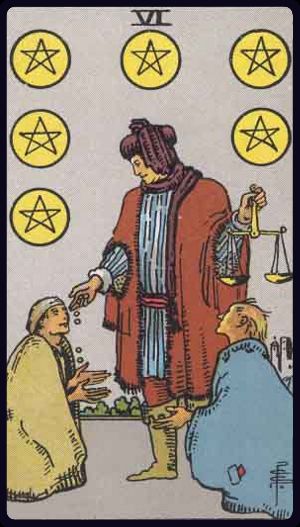
The Six of Pentacles shows a figure weighing coins, a beggar receiving, another waiting. It is the card of giving and receiving — the flow of help, and its balance.
Historical meanings below are quoted from A. E. Waite’s The Pictorial Key to the Tarot (1911). The language reflects that period; the following sections offer contemporary reflection.
Upright meaning
Presents, gifts, gratification another account says attention, vigilance now is the accepted time, present prosperity, etc.
Reversed meaning
Desire, cupidity, envy, jealousy, illusion.
Psychological themes
It represents the exchange of support: charity, fairness, the gift that circulates. It appears at a time of giving or of accepting. The scales ask whether the exchange is just.
Traditional and cultural meanings
In the traditional reading the Six is presents, gifts and gratification. It has long been read as attention and present prosperity, and by reversal as desire, envy and illusion. The coins are weighed; the hand gives.
Ways to reflect on this card
- If you give: the help that circulates.
- If you receive: the pride that blocks the gift.
- If you weigh: is the exchange fair?
Questions for reflection
- Where could I give, or accept, help?
- Is my giving free or owed?
- What would fair exchange look like?
Common questions
What does the Six of Pentacles mean?
Giving and receiving — charity, fairness, the flow of support. The card weighs whether help moves justly.
Six vs Ten of Pentacles?
The Six is the act of giving; the Ten is the wealth established. One circulates, the other settles.
Related cards
Explore the imagery in your own dream
Tarot offers one way to think about symbols. A dream interpretation also considers the events, feelings, and personal details you describe.
Interpret my dream Keep a dream journal Draw a three-card spread
Card readings here are a psychological and cultural lens, not a prediction and not medical or financial advice.