Waite-Smith tarot (1909)
Knight of Swords
The Knight of Swords rides hard, sword forward, heedless. He is the card of the charged mind — speed of thought and action that brooks no delay.
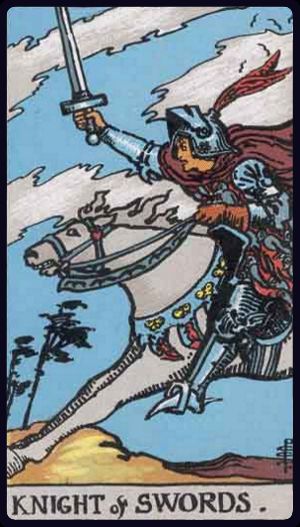
Historical meanings below are quoted from A. E. Waite’s The Pictorial Key to the Tarot (1911). The language reflects that period; the following sections offer contemporary reflection.
Upright meaning
Skill, bravery, capacity, defence, address, enmity, wrath, war, destruction, opposition, resistance, ruin. There is therefore a sense in which the card signifies death, but it carries this meaning only in its proximity to other cards of fatality.
Reversed meaning
Imprudence, incapacity, extravagance.
Psychological themes
It represents the intellect in full career: decisive, restless, sometimes reckless. He appears when you must move now and think after. The speed is his glory and his danger.
Traditional and cultural meanings
In the traditional reading the Knight is skill, bravery and defence. It has long been read as enmity, war and destruction, and by reversal as imprudence and extravagance. The horse does not slow for the question.
Ways to reflect on this card
- If you charge: the clarity of the strike.
- If you rush: speed without aim.
- If you clash: win the point, lose the peace?
Questions for reflection
- What am I racing toward decide?
- Is this conviction or just velocity?
- What will the speed cost me?
Common questions
What does the Knight of Swords mean?
Swift, decisive action — the mind charging. Energy and skill, but a risk of recklessness.
Knight vs Page of Swords?
The Page scouts; the Knight acts on the finding at full tilt. One observes, the other charges.
Related cards
Explore the imagery in your own dream
Tarot offers one way to think about symbols. A dream interpretation also considers the events, feelings, and personal details you describe.
Interpret my dream Keep a dream journal Draw a three-card spread
Card readings here are a psychological and cultural lens, not a prediction and not medical or financial advice.