Waite-Smith tarot (1909)
Page of Swords
The Page of Swords is a young figure with a sword raised, alert and watchful. He is the card of the keen observer — scrutiny, the warning, the question asked.
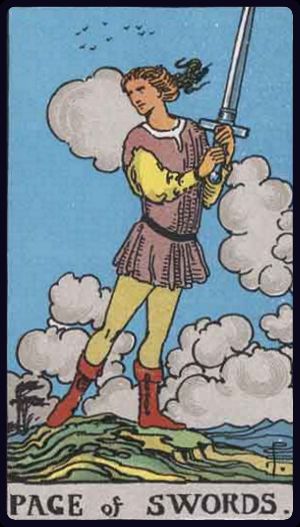
Historical meanings below are quoted from A. E. Waite’s The Pictorial Key to the Tarot (1911). The language reflects that period; the following sections offer contemporary reflection.
Upright meaning
Authority, overseeing, secret service, vigilance, spying, examination, and the qualities thereto belonging.
Reversed meaning
More evil side of these qualities; what is unforeseen, unprepared state; sickness is also intimated.
Psychological themes
It represents the investigative novice: curiosity turned to vigilance. It appears as news, a probe, a guard put up. The risk is suspicion that mistakes watching for knowing.
Traditional and cultural meanings
In the traditional reading the Page is authority, oversight and secret service. It has long been read as vigilance and examination, and by reversal as the unforeseen and a sickness. The page watches; he has not yet struck.
Ways to reflect on this card
- If you watch: the detail worth catching.
- If you probe: ask, don't accuse.
- If you suspect: evidence, not instinct.
Questions for reflection
- What am I trying to find out?
- Is my vigilance useful or paranoid?
- What would I do with the answer?
Common questions
What does the Page of Swords mean?
Alert observation — scrutiny, a question, watchfulness. The eager guard who notices before he acts.
Page vs Knight of Swords?
The Page watches and reports; the Knight charges on the insight. One scouts, the other rushes.
Related cards
Explore the imagery in your own dream
Tarot offers one way to think about symbols. A dream interpretation also considers the events, feelings, and personal details you describe.
Interpret my dream Keep a dream journal Draw a three-card spread
Card readings here are a psychological and cultural lens, not a prediction and not medical or financial advice.