Waite-Smith tarot (1909)
Ace of Pentacles
The Ace of Pentacles is a hand offering a coin from which a rose and a garden grow. It is the card of the tangible start — a new resource, a real opportunity.
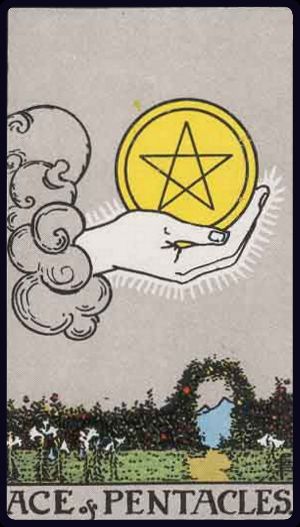
Historical meanings below are quoted from A. E. Waite’s The Pictorial Key to the Tarot (1911). The language reflects that period; the following sections offer contemporary reflection.
Upright meaning
Perfect contentment, felicity, ecstasy; also speedy intelligence; gold.
Reversed meaning
The evil side of wealth, bad intelligence; also great riches. In any case it shews prosperity, comfortable material conditions, but whether these are of advantage to the possessor will depend on whether the card is reversed or not.
Psychological themes
It represents the birth of the material and practical: a seed of livelihood. It appears at a concrete beginning — work, money, the body. The coin is solid; plant it.
Traditional and cultural meanings
In the traditional reading the Ace is perfect contentment and gold. It has long been read as speedy intelligence and prosperity, and by reversal as the evil side of wealth. The garden grows from the coin; the start is earthly.
Ways to reflect on this card
- If you begin: the tangible chance, take it.
- If you receive: a resource, not a windfall.
- If you plant: the coin becomes a garden.
Questions for reflection
- What concrete opportunity is in front of me?
- Am I planting or just holding the coin?
- What would a practical first step be?
Common questions
What does the Ace of Pentacles mean?
A material beginning — new work, money or a tangible opportunity. The seed of livelihood, to be planted.
Ace of Pentacles vs Ace of Cups?
Cups is feeling; Pentacles is the material world. One opens the heart, the other offers the coin.
Related cards
Explore the imagery in your own dream
Tarot offers one way to think about symbols. A dream interpretation also considers the events, feelings, and personal details you describe.
Interpret my dream Keep a dream journal Draw a three-card spread
Card readings here are a psychological and cultural lens, not a prediction and not medical or financial advice.