Waite-Smith tarot (1909)
Nine of Pentacles
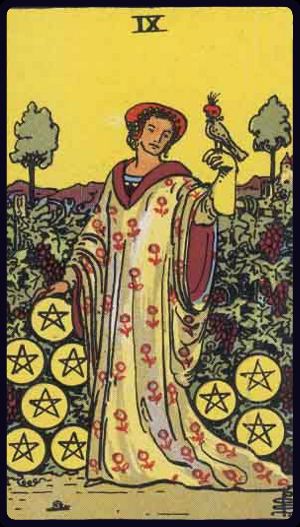
The Nine of Pentacles shows a figure in a garden, a falcon on her glove, vines of coins. It is the card of earned ease — independence enjoyed, the fruit of one's own care.
Historical meanings below are quoted from A. E. Waite’s The Pictorial Key to the Tarot (1911). The language reflects that period; the following sections offer contemporary reflection.
Upright meaning
Prudence, safety, success, accomplishment, certitude, discernment.
Reversed meaning
Roguery, deception, voided project, bad faith.
Psychological themes
It represents self-sufficient contentment: the pleasure of having built it yourself. It appears at a quiet prosperity. The falcon is tamed; the garden is hers.
Traditional and cultural meanings
In the traditional reading the Nine is prudence, safety and accomplishment. It has long been read as discernment and certitude, and by reversal as roguery and deception. The vines bear; the keeper rests in them.
Ways to reflect on this card
- If you thrive: the ease you earned.
- If you alone: the independence that suits you.
- If you doubt: the garden is real.
Questions for reflection
- What have I built that is mine alone?
- Can I enjoy it without guilt?
- Where is my self-sufficiency serving me?
Common questions
What does the Nine of Pentacles mean?
Earned independence and ease — the fruit of your own care, enjoyed in quiet. Self-sufficient contentment.
Nine vs Ten of Pentacles?
The Nine is the solitary keeper; the Ten is the whole household. One tends her own garden, the other the family estate.
Related cards
Explore the imagery in your own dream
Tarot offers one way to think about symbols. A dream interpretation also considers the events, feelings, and personal details you describe.
Interpret my dream Keep a dream journal Draw a three-card spread
Card readings here are a psychological and cultural lens, not a prediction and not medical or financial advice.