Waite-Smith 塔罗(1909)
Ten of Swords
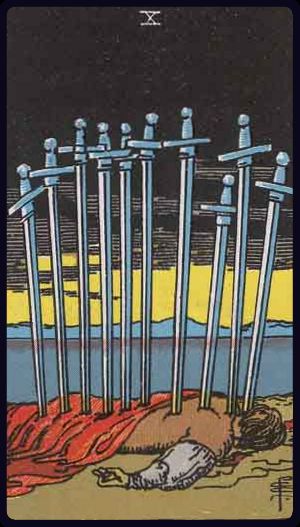
The Ten of Swords shows a figure prone, ten swords in the back, a distant dawn. It is the card of the absolute low — the end of the worst, and the light after.
下列历史牌义引自 A. E. Waite《The Pictorial Key to the Tarot》(1911),用语反映了当时的时代背景;后续章节提供当代反思视角。
正位牌义
Whatsoever is intimated by the design; also pain, affliction, tears, sadness, desolation. It is not especially a card of violent death.
逆位牌义
Advantage, profit, success, favour, but none of these are permanent; also power and authority.
这张牌在做什么
It represents the rock bottom that is also a floor: nothing worse remains. It appears at the completion of suffering. The dawn is the promise the dark could not erase.
文化与传统的读法
In the traditional reading the Ten is pain, affliction and desolation. It has long been read as not a card of violent death, and by reversal as advantage and favour that pass. The swords are spent; the morning comes.
取决于你当时的感受
- If you hit bottom: it cannot go lower.
- If you end: the worst is complete.
- If you see dawn: this is the turning.
值得想一想的几个问题
- What is finally over?
- Is this the lowest, or just low?
- What would beginning again require?
常见问题
Does the Ten of Swords mean death?
Almost never. It means the worst is complete — rock bottom, after which the only direction is up. The dawn is in the card.
Ten vs Three of Swords?
The Three is the heart pierced; the Ten is the ordeal finished. One is the wound, the other is the end of suffering.
相关牌
你的梦,究竟在说什么?
牌只给你一个角度。完整的解读看的是那个真正属于你的细节——你的梦挑中的是哪一个版本。
本页牌义是心理与文化视角,不是预言,也不构成医疗或财务建议。