Waite-Smith 塔罗(1909)
Seven of Swords
The Seven of Swords shows a figure carrying five swords, leaving two behind. It is the card of the quiet exit — strategy, evasion, the plan that slips away.
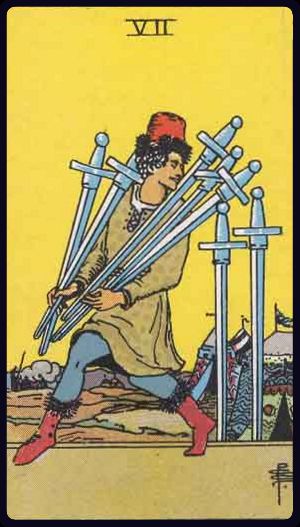
下列历史牌义引自 A. E. Waite《The Pictorial Key to the Tarot》(1911),用语反映了当时的时代背景;后续章节提供当代反思视角。
正位牌义
Design, attempt, wish, hope, confidence; also quarrelling, a plan that may fail, annoyance. The design is uncertain in its import, because the significations are widely at variance with each other.
逆位牌义
Good advice, counsel, instruction, slander, babbling.
这张牌在做什么
It represents the sideways move: getting what you can and leaving the rest. It appears when open fight is unwise. The shadow is deception dressed as cleverness.
文化与传统的读法
In the traditional reading the Seven is design, attempt and hope. It has long been read as quarrelling and a plan that may fail, and by reversal as good advice, counsel and slander. The figure takes five; two are left as a tell.
取决于你当时的感受
- If you scheme: the exit that saves you.
- If you steal: the cost of the sneak.
- If you advise: the counsel worth hearing.
值得想一想的几个问题
- What am I quietly extracting?
- Is this strategy or dishonesty?
- What did I leave behind as a tell?
常见问题
What does the Seven of Swords mean?
A strategic withdrawal or evasion — getting what you can and slipping away. It can also warn of deceit.
Seven vs Five of Swords?
The Five wins by force and stain; the Seven wins by slipping out. One dominates, the other escapes.
相关牌
你的梦,究竟在说什么?
牌只给你一个角度。完整的解读看的是那个真正属于你的细节——你的梦挑中的是哪一个版本。
本页牌义是心理与文化视角,不是预言,也不构成医疗或财务建议。