Waite-Smith 塔罗(1909)
The Devil
The Devil chains two figures to his pedestal, horns and flame. He is the card of bondage chosen and mistaken for necessity — the chain that is loose.
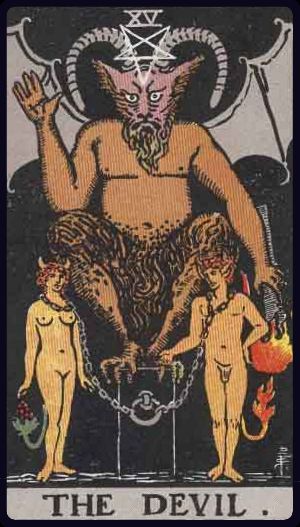
下列历史牌义引自 A. E. Waite《The Pictorial Key to the Tarot》(1911),用语反映了当时的时代背景;后续章节提供当代反思视角。
正位牌义
Ravage, violence, vehemence, extraordinary efforts, force, fatality; that which is predestined but is not for this reason evil.
逆位牌义
Evil fatality, weakness, pettiness, blindness.
这张牌在做什么
He represents the compulsions and fears we serve without admitting it. He appears when a bondage is more comfortable than freedom. The secret is the loose collar: the leash is mostly belief.
文化与传统的读法
In the traditional reading the Devil is ravage, violence and fateful force. He has long been read as vehemence and fatality, and by reversal as weakness, pettiness and blindness. The card names the prison we agree to.
取决于你当时的感受
- If you feel trapped: ask who locked it, and when.
- If you are addicted: the want that wears the mask of need.
- If you are afraid: the fear that keeps the chain on.
值得想一想的几个问题
- What are you serving that you call necessity?
- Where is the collar actually loose?
- What would freedom cost that you are avoiding?
常见问题
Is the Devil purely evil?
In reading, it names bondage — especially the kind we choose or tolerate. It is a picture of compulsion, not a verdict on a person.
Why are the chains loose?
To show the bondage is partly agreed to. The figure can rise; the first step is seeing the collar was never locked.
相关牌
你的梦,究竟在说什么?
牌只给你一个角度。完整的解读看的是那个真正属于你的细节——你的梦挑中的是哪一个版本。
本页牌义是心理与文化视角,不是预言,也不构成医疗或财务建议。